Children learn best when education goes beyond textbooks and classrooms. Activities such as chess, abacus, and classical art provide children with opportunities to think, create, solve problems, and express themselves in meaningful ways.
At Asian Schools, we believe that every child has unique abilities that can be developed through the right combination of structured learning, creativity, and practice.
The Power of Chess
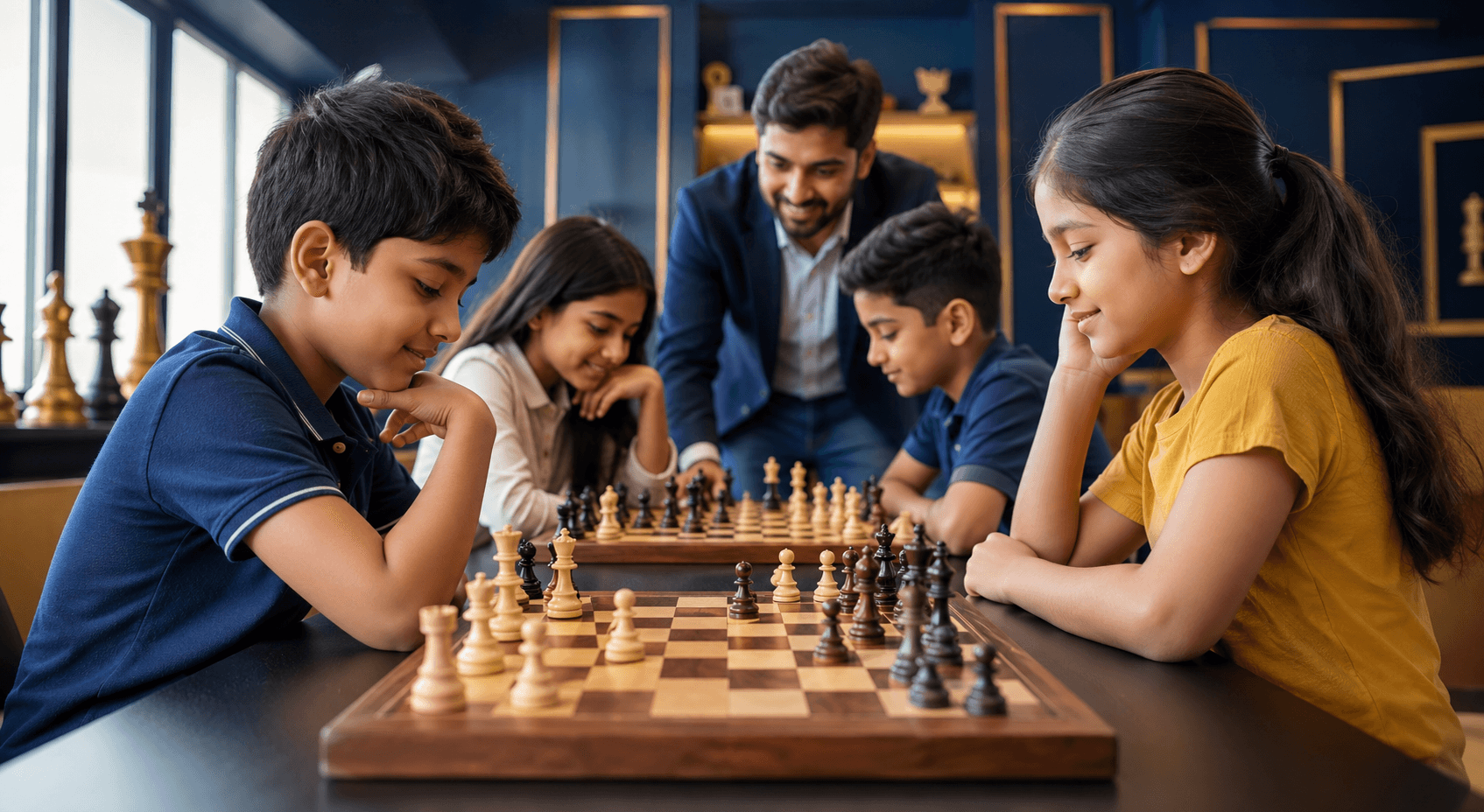
Chess is more than a game of pieces and squares. It encourages children to think ahead, evaluate choices, and understand the consequences of their decisions.
While playing chess, children naturally develop skills such as:
- • Concentration and focus
- • Logical thinking
- • Problem-solving
- • Strategic planning
- • Patience and discipline
- • Decision-making
- • Confidence
A child who learns to pause, analyze a position, and choose a move is also practicing an important real-life skill: thinking before acting.
How Abacus Supports Mental Development
Abacus learning introduces children to numbers in an interactive and visual way. With regular practice, children learn to perform calculations while improving their concentration and memory.
Abacus activities can help children develop:
- • Numerical understanding
- • Mental calculation
- • Memory
- • Concentration
- • Speed and accuracy
- • Confidence with numbers
The goal is not simply to make children faster at calculations. It is to encourage them to approach mathematical problems with confidence and a structured way of thinking.
Classical Art and Creativity
Creative learning is equally important in a child's development. Classical art gives children an opportunity to explore imagination, observation, patience, and self-expression.
Through drawing, painting, and other forms of artistic practice, children can learn to:
- • Express their ideas creatively
- • Improve observation skills
- • Develop patience
- • Strengthen hand-eye coordination
- • Explore imagination
- • Appreciate beauty and culture
Art also provides children with a space where there may be more than one correct answer. This encourages independent thinking and creativity.
Developing Well-Rounded Learners
Chess develops strategic thinking. Abacus strengthens numerical and mental skills. Classical art encourages creativity and expression.
When these activities are combined with a supportive learning environment, children get opportunities to develop different abilities at the same time.
The objective is not just academic achievement. It is to help children become confident, curious, disciplined, creative, and independent learners.
Learning Beyond the Classroom
Some of the most valuable skills children develop are not always measured through examinations. Concentration, patience, creativity, communication, decision-making, and problem-solving are skills that children can carry with them throughout their education and future careers.
Structured extracurricular learning can therefore complement traditional education by giving children practical opportunities to think, experiment, make decisions, and learn from mistakes.
Every Child Can Grow
Every child learns differently. Some children discover their strengths through numbers, others through strategy, creativity, or artistic expression.
The role of education is to provide children with opportunities to explore these strengths and gradually build confidence in their abilities.
At Asian Schools, our focus is on creating learning experiences that make education engaging, purposeful, and enjoyable.
Because when children learn to think, create, and explore, they are not simply preparing for the next examination—they are developing skills for life.